VAT Made Easy: What Sole Proprietorships Need to Know
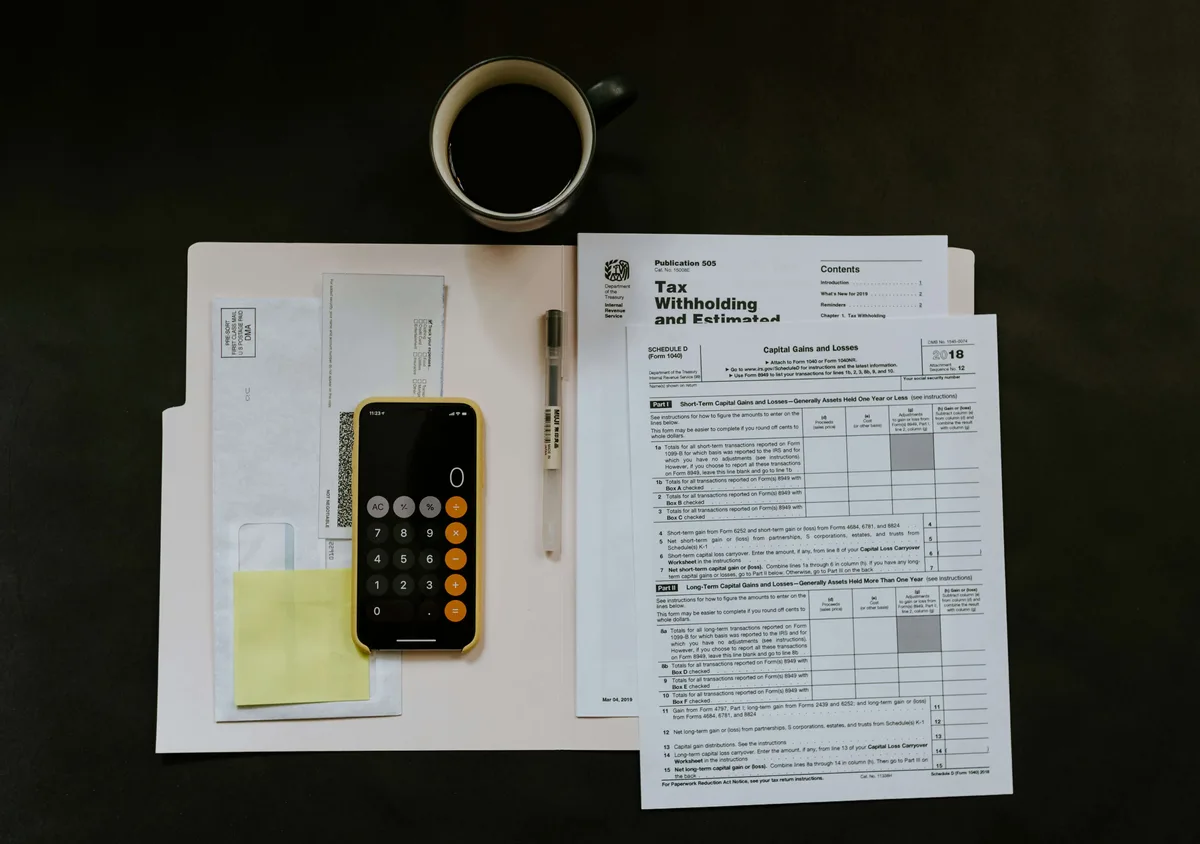
Once a sole proprietorship in Switzerland achieves an annual turnover of more than CHF 100,000, it becomes subject to value added tax (VAT). This means that you must register your business with the Swiss Federal Tax Administration (SFTA) and regularly submit VAT returns. But don’t worry — there are simplified rules that make getting started easier. Combined with simple accounting, you can keep everything under control.
When does VAT become relevant?
VAT liability begins as soon as your total turnover — including revenue from abroad — exceeds the threshold of CHF 100,000. The following steps are then required:
- Registration of your sole proprietorship with the SFTA
- Issuing invoices showing VAT separately
- Regular submission of VAT returns (quarterly for the effective method, semi-annually for the flat-rate method)
Important: Even if you only slightly exceed the turnover threshold, you are retroactively liable for VAT for the entire financial year from the moment you cross the limit. Therefore, plan your registration early if you notice your turnover approaching CHF 100,000.
Effective method vs. flat-rate tax method
In Switzerland, there are two accounting methods for VAT:
Effective method
With the effective method, you offset the VAT actually collected (output tax) against the VAT paid on your business expenses (input tax). You only pay the difference to the SFTA. This method requires detailed recording of all input taxes but offers the advantage that you can fully reclaim the VAT paid on larger purchases.
Flat-rate tax method
For many sole proprietorships, accounting using the flat-rate tax method is the more attractive option. This simplified procedure requires you to remit only a fixed percentage of your turnover to the tax authorities — without having to record each individual input tax. The flat-rate tax percentage is set by the SFTA on an industry-specific basis and already accounts for the typical input tax portion as a lump sum.
Advantages of the flat-rate tax method:
- Less administrative effort: No need for detailed input tax tracking
- Simple calculation: Fixed percentage instead of complex calculations
- Time savings: Less bookkeeping effort, more focus on your core business
- Predictability: You always know exactly how much VAT you need to remit
Disadvantages: If you make large investments (e.g. expensive machinery or vehicles), you cannot reclaim the input tax on them. In such years, the effective method may be more cost-effective.
Example:
Assume you provide services and apply a flat-rate tax of 6.5%. With an annual turnover of CHF 100,000, you pay only CHF 6,500 VAT to the tax authorities — without complicated input tax calculations. The specific flat-rate percentage is set by the SFTA on an industry-specific basis and ranges from 0.1% to 6.8%.
Agreed vs. received consideration
Another important point is the question of when you account for VAT:
- Agreed consideration: VAT is due as soon as you issue the invoice — regardless of whether the customer has already paid. This is the standard method.
- Received consideration: VAT is only due when the payment is actually received. This protects your liquidity but must be applied for at the SFTA.
For sole proprietorships with long payment terms or seasonal fluctuations, accounting based on received consideration can be a real advantage.
Accounting periods and deadlines
The accounting period depends on the chosen method:
Effective method – quarterly:
- Q1 (January-March): due by 31 May
- Q2 (April-June): due by 31 August
- Q3 (July-September): due by 30 November
- Q4 (October-December): due by 28 February
Flat-rate method – semi-annually:
- First half (January-June): due by 31 August
- Second half (July-December): due by 28 February
Late submissions risk reminder fees and default interest. With regular bookkeeping and the right tools, you can avoid unpleasant surprises.
How to prepare optimally
- Use tools: Accounting software such as Effizo helps you calculate VAT correctly and prepare returns.
- Keep an overview: Maintain accurate documentation of your income and expenses — for example with a clear dashboard.
- Plan reserves: Set aside the estimated VAT in good time to avoid payment difficulties.
- Keep receipts without gaps: Every invoice and receipt must be retained for at least 10 years — digitally, this is particularly easy.
- Mark deadlines in your calendar: Late returns cost unnecessary money.
Common mistakes in VAT accounting
Even experienced self-employed individuals make mistakes with VAT accounting. The most common ones:
- Wrong VAT rates on invoices — always check whether the standard rate (8.1%), the reduced rate (2.6%) or the special rate (3.8%) applies
- Invoices without VAT number — once you are VAT-registered, your UID number must appear on every invoice
- Mixing private and business expenses — only business expenses entitle you to input tax deduction
- Forgetting own-consumption tax — if you withdraw goods or services for private use, VAT is owed on them
Voluntary VAT registration
Even if your turnover is below CHF 100,000, you can voluntarily register with the SFTA as VAT-liable. This can be worthwhile if you make significant investments and want to reclaim the input tax on those purchases. Additionally, a VAT number can appear more professional to business clients.
Note: Voluntary registration binds you for at least one year. Check beforehand whether the advantages justify the additional administration.
Conclusion
VAT accounting may seem complicated at first, but with the right preparation and the right tools, it quickly becomes a routine task. Choose the accounting method that suits your situation, keep your receipts in order, and take advantage of what modern accounting software has to offer.
Effizo offers you all features at a fixed price — from simple accounting to VAT accounting. Also learn how to optimally prepare your tax declaration as a sole proprietor or read our tips for organising your accounting.